
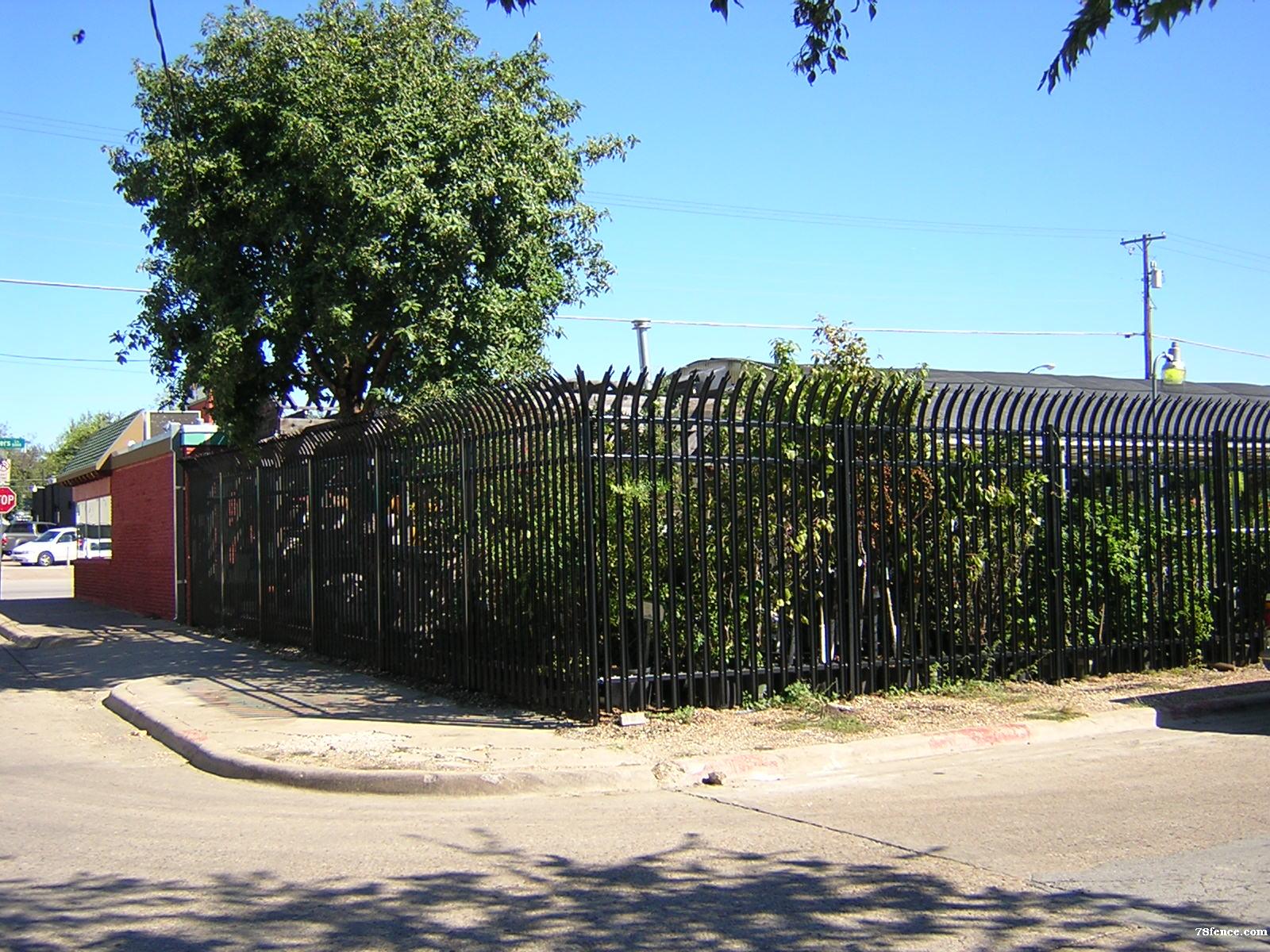
Dallas businesses with high-value equipment, sensitive operations, or repeat trespassing problems eventually run into the same issue: a standard fence slows people down, but it doesn’t stop a determined intruder from climbing over or cutting through it. That’s the gap anti-climb fencing is built to close.
What is anti-climb fencing? Anti-climb fencing is a high-security welded wire mesh fence, most commonly “358” mesh with openings just 3 inches tall and 0.5 inches wide, that leaves no finger or toe hold for scaling and no room for bolt cutters or hand tools. For Dallas–Fort Worth businesses, it creates a perimeter that resists both climbing and cutting while keeping clear sightlines for cameras and security staff.
Since 1978, 78 Fence has designed, installed, and repaired commercial fencing and gates across Dallas–Fort Worth. As part of our perimeter security solutions, we install anti-climb mesh and welded wire fence systems from Ameristar, one of the nation’s leading perimeter security manufacturers. This guide explains how anti-climb fencing works, who needs it, and how it compares with the other commercial fence types we install.
How Does Anti-Climb Fencing Stop Intruders?
Most fence breaches happen one of two ways: someone climbs over, or someone cuts through. Anti-climb mesh is engineered to defeat both.
Why can’t intruders climb a 358 mesh fence?
The name “358” comes from the mesh dimensions: a 3-inch by 0.5-inch opening formed with heavy 8-gauge welded steel wire. A half-inch gap is too narrow for fingers, toes, or the tip of a boot. With no handholds or footholds, scaling the fence without a ladder or other equipment becomes extremely difficult, and bringing a ladder to a fence line draws attention.
Why is anti-climb mesh hard to cut?
The tight, welded wire grid leaves almost no space to insert the jaws of bolt cutters or the blade of a hand tool. Cutting through a panel takes power tools and time, which creates noise and gives cameras, alarms, and on-site staff a chance to respond. Because the wires are welded at every intersection rather than woven, the panels stay rigid and resist prying and bending.
Can security cameras see through anti-climb fencing?
Yes. Even with its dense pattern, welded mesh keeps the fence line see-through, so surveillance cameras and patrols can still watch activity on both sides. That visibility is one reason anti-climb mesh is preferred over solid walls for many security perimeters.
What Is Anti-Climb Fencing Made Of?
A complete anti-climb system is more than mesh panels. Heavy-duty commercial systems typically include:
- Welded wire mesh panels in a tight anti-climb pattern, such as 3″ x 0.5″ mesh.
- Rigid steel rails and posts sized for taller security heights and Texas wind loads.
- Security fasteners that are difficult to remove from the outside.
- Galvanized steel with a powder-coated finish for corrosion resistance in North Texas heat, humidity, and storms.
- Optional toppings such as barbed wire where permitted and specified for the site.
As an example of the specifications involved, Ameristar’s WireWorks® Anti-Climb system is offered in 8-foot and 10-foot heights using 3″ x 0.5″ welded wire mesh panels on steel rails and I-beam posts, and its framework can serve as a raceway for security cabling, intrusion detection, and access control wiring. Your actual fence height, wire gauge, and finish should be selected for your site, security needs, and local code requirements.
Which Dallas Businesses Need Anti-Climb Fencing?
Anti-climb fencing makes the most sense where a breach would be costly, dangerous, or regulated. Common applications include:
- Utilities and critical infrastructure, such as substations, pump stations, and telecom sites.
- Data centers where physical security protects network operations. See our guide to commercial security fencing for data centers.
- Airports and transportation facilities with restricted areas. Learn more about airport perimeter security gates.
- Correctional and government facilities that require a hardened perimeter.
- Warehouses, equipment yards, and distribution centers storing high-value inventory, vehicles, or materials.
- Construction yards and contractor storage lots dealing with repeat theft of tools, copper, or equipment.
If your current fence keeps getting climbed, cut, or patched, review the signs your commercial fence is becoming a security risk. Repeat breaches are often the clearest sign it’s time to upgrade.
How Does Anti-Climb Fencing Compare to Other Commercial Fences?
Every fence type has a place. The right choice depends on your threat level, appearance requirements, and budget. Here is how anti-climb mesh compares with the other commercial fencing options 78 Fence installs:
| Feature | Standard Chain Link | Chain Link with Barbed Wire | Ornamental Steel (High-Security Styles) | Anti-Climb Welded Mesh (358) |
|---|---|---|---|---|
| Climb resistance | Low: diamond openings provide footholds | Moderate: topping discourages climbing over | Moderate to high, depending on picket spacing and design | Very high: no finger or toe holds |
| Cut resistance | Low: hand tools cut woven wire quickly | Low: the fabric itself can still be cut | High: heavy welded steel pickets and rails | High: openings too tight for bolt cutters |
| Visibility for cameras | High | High | High | High, with a denser look |
| Appearance | Utilitarian | Industrial | Polished and architectural | Clean, modern, high-security |
| Relative investment | Lowest | Low | Moderate to higher | Higher |
| Best fit | General boundaries, parking lots, athletic fields | Storage yards, construction sites, industrial lots | Office campuses, schools, apartments, public buildings | Utilities, data centers, airports, high-value yards |
Bottom line: Commercial chain link fencing is the economical choice for general boundaries, and ornamental steel balances security with curb appeal. Anti-climb welded mesh is the right investment when keeping intruders out is the top priority. For a deeper cost and maintenance breakdown of the first two options, read Commercial Chain Link vs. Ornamental Steel Fencing.
Is Anti-Climb Fencing Enough on Its Own?
A strong fence is the first layer, but the best perimeters combine several layers so each one supports the others. As we explain in the role of commercial fencing in a complete perimeter security plan, anti-climb fencing works best alongside:
- Secure gates. A perimeter is only as strong as its entry points. Automated security gates such as cantilever slide, swing, and vertical lift gates keep vehicle access under control.
- Access control. Keypads, RFID badge readers, and remote entry systems record who comes and goes.
- Vehicle barriers. Crash-rated barriers, bollards, and barrier arms stop vehicles from ramming through the fence line. Learn how vehicle barriers enhance security and access control.
- Surveillance and detection. Cameras and intrusion detection give your team time to respond while the fence slows an intruder down.
What Should You Consider Before Installing Anti-Climb Fencing in Dallas?
How tall should an anti-climb fence be?
Height depends on your security goals, the site, and local requirements. Commercial anti-climb systems are commonly specified at 8 feet or taller for high-security sites. We’ll review your property and recommend a height that fits your risk level and any applicable code or permit requirements.
Does the ground along the fence line matter?
Yes. Gaps under a fence are an easy way in, and North Texas clay soil shifts with wet and dry cycles. Proper post footings and a tight bottom clearance help keep the fence straight and stop intruders from crawling underneath.
Can anti-climb fencing tie into existing gates and fencing?
In many cases, yes. Anti-climb mesh can be used on the highest-risk sections of a property, such as an equipment yard or utility enclosure, while more economical fencing covers lower-risk boundaries. Your gates and access control can be integrated into the new fence line.
What maintenance does anti-climb fencing need?
Powder-coated galvanized systems are low maintenance, but every security fence should be inspected regularly for damage, loose hardware, soil erosion, and vegetation growth along the line. Our commercial fence maintenance tips for property managers cover what to check. If damage does occur, our commercial fence repair team in Dallas can restore your perimeter.
Frequently Asked Questions About Anti-Climb Fencing
What does 358 mean in 358 fencing?
358 refers to the mesh dimensions in imperial units: a 3-inch by 0.5-inch opening made with 8-gauge steel wire. The tight opening is what makes the fence difficult to climb and cut.
Is anti-climb fencing the same as welded wire fencing?
Anti-climb fencing is a type of welded wire fencing. Standard welded wire fence panels often have larger openings, while anti-climb mesh uses a much tighter pattern and heavier framework specifically designed to block hand and foot holds and resist cutting.
Can you see through anti-climb mesh?
Yes. Anti-climb mesh is see-through from most angles, which keeps sightlines open for security cameras and patrols while still providing a strong physical barrier.
Can barbed wire be added to an anti-climb fence?
Many anti-climb systems offer barbed wire arms and other security toppings as options. Whether a topping is appropriate depends on your site and local regulations, so we’ll review it during your consultation.
Is anti-climb fencing only for high-security government sites?
No. While it is common at utilities, airports, and correctional facilities, anti-climb fencing is also a practical upgrade for Dallas warehouses, equipment yards, data centers, and any business facing repeat trespassing or theft.
Does 78 Fence install gates for anti-climb fence systems?
Yes. 78 Fence installs, maintains, and repairs commercial security gates, including cantilever, swing, vertical lift, and slide gates, and integrates them with access control systems and vehicle detection loops.
Anti-Climb Fencing Installation in Dallas–Fort Worth
Since 1978, 78 Fence has helped Dallas–Fort Worth businesses protect their property with commercial security fences, automated gates, and complete perimeter security systems. From a single high-risk equipment yard to a full facility perimeter, our team will assess your site, recommend the right level of protection, and install a system built to last.
Ready to secure your perimeter with anti-climb fencing? Call 78 Fence at 214-351-0212, email robert@78fence.com, or contact us online to discuss your commercial project.