
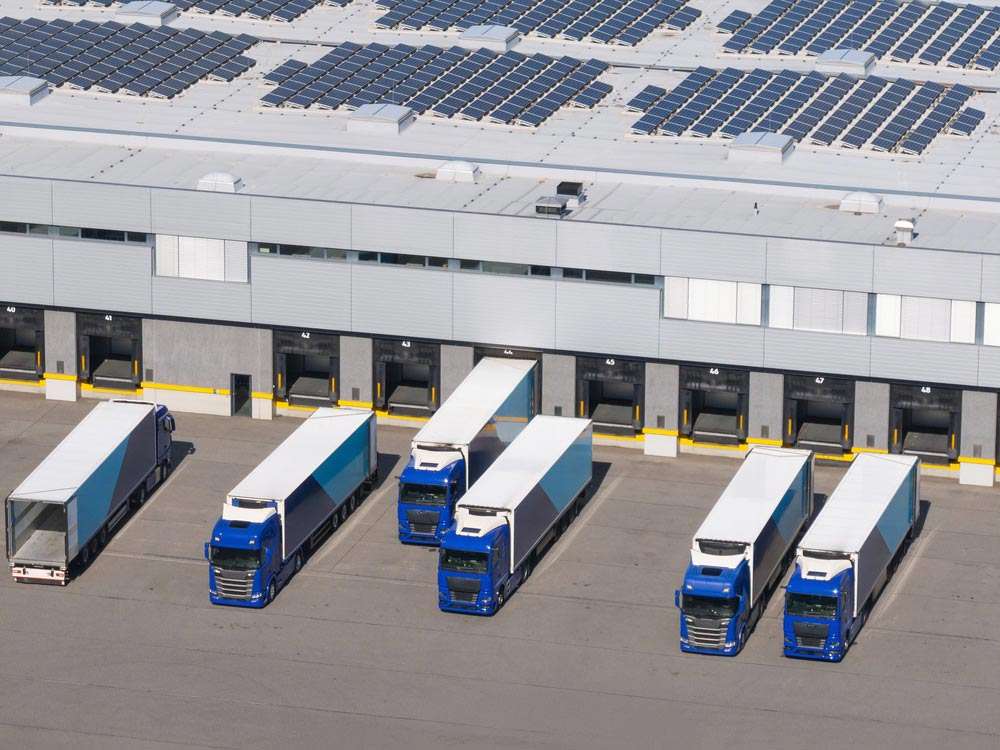
At 78 Fence, we’ve worked in the fencing industry since 1978, providing commercial fencing, automated security gates, and specialized access control solutions. Understanding the differences between gate systems can help trucking facility owners and managers select an entrance that supports daily operations while protecting valuable equipment, trailers, and inventory.
Why Trucking Facilities Need Specialized Commercial Gates
A trucking facility operates differently from a conventional office building or retail property. Semi-trucks, trailers, delivery vehicles, employees, and contractors may enter and exit throughout the day, placing significant demands on entrance equipment.
The wrong gate configuration can create bottlenecks, require unnecessary maintenance, or interfere with the movement of large commercial vehicles.
Several factors make trucking facility gates particularly important:
- Wide vehicle entrances: Tractor-trailers require adequate clearance to navigate entrances without striking gate posts, fencing, or surrounding structures. Gate openings should be designed around actual vehicle dimensions and turning movements.
- Frequent gate operation: Facilities handling continuous deliveries may operate entrance gates many times throughout the day. Gate operators and mechanical components must be appropriately rated for the expected duty cycle.
- Protection of valuable assets: Truck yards frequently contain trailers, cargo, equipment, fuel storage, and other assets that require controlled access and perimeter protection.
- Reliable access during business operations: Gate malfunctions can delay shipments, interrupt deliveries, and create operational challenges for drivers and facility personnel.
- Access control requirements: Trucking facilities may need to distinguish between employees, scheduled carriers, contractors, and unauthorized vehicles entering the property.
- Exposure to outdoor conditions: Commercial gates must withstand rain, wind, temperature changes, dust, and debris while maintaining reliable operation.
Because these factors vary from one facility to another, gate selection should begin with an evaluation of the property’s layout and operational requirements.
What Are the Best Types of Gates for Trucking Facilities?
Several commercial gate configurations can work effectively at trucking facilities. Each offers advantages depending on the entrance width, available operating space, traffic patterns, and required level of security.
1. Cantilever Slide Gates: A Strong Choice for High-Traffic Truck Yards
Cantilever slide gates are among the most practical options for trucking facilities with frequent vehicle traffic.
Unlike traditional track-mounted sliding gates, cantilever gates are supported by rollers and structural components positioned alongside the entrance. The gate moves horizontally without requiring a track across the roadway.
This design offers several advantages for trucking operations:
- No ground track across the entrance: Trucks can pass through without crossing a gate track that may accumulate gravel, dirt, or other debris.
- Suitable for wide commercial openings: Properly engineered cantilever gates can accommodate substantial entrance widths required by tractor-trailers and commercial vehicles.
- Compatible with automation: Cantilever gates can be equipped with commercial gate operators and electronic access control equipment.
- Reduced exposure to roadway debris: Eliminating the ground track removes one common source of obstruction and maintenance.
- Strong perimeter security: When integrated with commercial fencing and appropriate access controls, cantilever gates help establish a controlled vehicle entrance.
Best applications: Truck yards, freight terminals, warehouses, distribution centers, and logistics facilities with sufficient space alongside the entrance for the gate to retract.
One important consideration is that cantilever gates require adequate lateral space for the gate panel and its counterbalance section. Facilities with limited room along the fence line may need another configuration.
2. Tandem Slide Gates: Ideal for Wide Entrances With Limited Side Clearance
Tandem slide gates offer an alternative for trucking facilities where the entrance is wide but available space along the fence line is restricted.
These systems use multiple gate sections that move in a coordinated configuration, reducing the amount of lateral storage space required compared with certain single-panel sliding gate designs.
Advantages may include:
- Space-efficient operation: Multiple moving panels can reduce the horizontal area required to store the gate in its open position.
- Accommodation of larger openings: Tandem configurations can be designed for wide entrances used by trucks, trailers, and heavy commercial equipment.
- Automated access: Compatible configurations can be integrated with commercial gate operators and access control systems.
- Flexible property layouts: Tandem gates may provide an option where nearby buildings, property boundaries, or existing infrastructure limit conventional gate movement.
Best applications: Trucking facilities with wide driveways and restricted space for a full-length sliding gate.
Because tandem systems incorporate multiple moving sections, proper engineering, installation, and maintenance are important for dependable operation.
3. Box Frame Roller Gates: Heavy-Duty Solutions for Large Commercial Entrances
Box frame roller gates are another option for trucking facilities requiring substantial gate structures.
These gates use reinforced framing and roller assemblies to support movement across an entrance. Depending on the design, they may be suitable for large openings and demanding commercial environments.
Potential benefits include:
- Reinforced structural design: Box frame construction provides rigidity for larger gate assemblies.
- Heavy-duty applications: Properly designed systems can accommodate facilities with substantial gate dimensions and frequent operational demands.
- Integration with commercial automation: Compatible gate operators can provide controlled access without requiring manual operation.
- Adaptability: Different frame and support configurations can address specific entrance conditions.
Best applications: Industrial yards, trucking facilities, and large commercial entrances where the gate’s structural requirements favor a reinforced roller-supported design.
The support arrangement, roller maintenance, and available travel space should be evaluated before selecting this type of system.
4. Vertical Pivot Gates: An Alternative When Horizontal Space Is Limited
Vertical pivot gates operate differently from traditional sliding gates. Instead of traveling horizontally along the fence line, the gate rotates upward to clear the entrance.
This design can be beneficial when a trucking facility has limited horizontal clearance.
Potential advantages include:
- Minimal horizontal gate travel: The gate does not require the same lateral storage area as a conventional slide gate.
- Alternative for challenging layouts: Vertical pivot systems may accommodate entrance locations constrained by nearby structures or property boundaries.
- Automated operation: These gates can be integrated with suitable access control systems.
- Specialized entrance configurations: They offer an additional option when conventional gate designs are impractical.
Best applications: Trucking and industrial facilities with limited side clearance, provided the gate’s operating envelope and overhead clearance are compatible with the site.
Because tractor-trailers can be tall, the vertical movement and fully open clearance of the gate must be carefully evaluated before installation.
5. Heavy-Duty Swing Gates: Best for Lower-Traffic or Secondary Entrances
Heavy-duty swing gates can provide a practical solution for trucking facilities with secondary entrances or locations where vehicle traffic is less frequent.
Swing gates operate on hinges and require sufficient space for the gate panels to open.
They may be appropriate for:
- Emergency or secondary access roads.
- Maintenance entrances with limited daily traffic.
- Equipment storage yards with sufficient gate swing clearance.
- Commercial properties where a sliding gate is unnecessary or unsuitable.
For high-traffic trucking entrances, swing gates may be less desirable when their opening path interferes with vehicle movement or requires extensive clearance.
Commercial Gate Comparison: Which System Is Best?
The following comparison summarizes how different commercial gate systems may fit trucking facility requirements.
| Gate Type | Primary Advantage | Important Consideration | Best Application |
|---|---|---|---|
| Cantilever Slide Gate | No ground track across the entrance | Requires sufficient lateral storage space | High-traffic truck yards |
| Tandem Slide Gate | Accommodates wide openings with reduced side storage | More complex moving components | Wide entrances with limited side clearance |
| Box Frame Roller Gate | Reinforced structural configuration | Roller support and travel requirements | Large industrial entrances |
| Vertical Pivot Gate | Does not require conventional horizontal gate travel | Vertical operating envelope and overhead clearance | Space-constrained entrances |
| Heavy-Duty Swing Gate | Conventional hinged operation | Requires clear swing area | Secondary or lower-traffic entrances |
For many trucking facilities, an automated cantilever slide gate is an excellent starting point. However, the final recommendation should be based on actual site measurements, expected gate cycles, vehicle dimensions, available clearance, and security requirements.
How Wide Should a Gate Be for a Trucking Facility?
One of the most important considerations when selecting a trucking facility gate is the clear opening width.
A tractor-trailer requires more than enough space to accommodate the physical width of the vehicle. Drivers must also have room to maneuver safely through the entrance, especially when turning from a public roadway or navigating around nearby structures.
Important factors include:
- Truck and trailer dimensions: The size and configuration of vehicles regularly using the entrance affect clearance requirements.
- Turning movements: Trucks entering from an angle may need significantly more room than vehicles approaching in a straight line.
- Roadway and driveway geometry: Entrance placement, curb locations, pavement width, and nearby obstacles can affect how easily trucks enter and exit.
- Two-way versus one-way traffic: Facilities with simultaneous inbound and outbound truck movements may require separate entrances or wider access arrangements.
- Future operational needs: Anticipated increases in traffic or changes in vehicle types should be considered during planning.
Rather than selecting a gate width based on a universal recommendation, trucking facility owners should have the entrance evaluated using the dimensions and turning paths of the vehicles expected to use it.
For more demanding locations, a vehicle turning-path analysis can help determine the appropriate clear opening and gate placement.
Should Trucking Facility Gates Be Automated?
For facilities with regular vehicle traffic, automated gates can provide significant operational advantages compared with manually operated entrances.
Automated security gates allow authorized vehicles to enter and exit without requiring personnel to physically open and close the gate each time.
Potential benefits include:
- Improved traffic efficiency: Automated operation can reduce the time drivers spend waiting for manual gate access.
- Controlled entry: Electronic credentials and access systems can help limit entry to approved drivers, employees, and contractors.
- Reduced manual labor: Facilities can avoid assigning personnel to repeatedly operate gates by hand.
- Consistent security procedures: Automated systems can help support established opening, closing, and access authorization processes.
- Integration with facility operations: Gate equipment may be connected to intercoms, access control platforms, and other compatible technologies.
Automation should be selected according to the expected frequency of use. A gate operating dozens or hundreds of times per day may require different equipment than one serving an occasional maintenance entrance.
What Access Control Systems Work Best for Truck Yards?
Controlling who enters a trucking facility is just as important as selecting the physical gate.
Many logistics operations need to accommodate employees, scheduled carriers, independent drivers, contractors, and occasional visitors. An effective access control strategy should account for these different user groups.
Common options include:
- Keypad systems: Authorized drivers or employees enter an assigned code to request access. Facilities should establish procedures for updating or disabling codes when necessary.
- Card readers and electronic credentials: Employee badges and other credentials can help manage recurring access for approved personnel.
- Intercom systems: Drivers can communicate with dispatchers, security personnel, or facility staff before being admitted.
- Remote access authorization: Compatible systems may allow authorized personnel to grant access without being physically located at the gate.
- Vehicle detection loops: Direct burial loops can detect vehicle presence and support specific gate functions when properly integrated with the operator.
- Camera monitoring: Surveillance systems can provide visibility around entrances and help document vehicle activity.
The best configuration depends on the facility’s staffing, traffic volume, security procedures, and existing technology.
How Can Trucking Facilities Reduce Gate Maintenance and Downtime?
Commercial gate downtime can create operational disruptions, especially at facilities that depend on scheduled deliveries and continuous truck movement.
Preventive maintenance is an important part of keeping automated entrances functioning reliably.
Facility managers should consider the following practices:
- Inspect moving components: Rollers, hinges, bearings, guides, and other mechanical parts should be checked for wear, damage, and alignment issues.
- Monitor gate movement: Unusual noises, inconsistent travel, vibration, or difficulty opening and closing may indicate developing mechanical problems.
- Maintain vehicle detection equipment: Detection loops and other sensing devices should be inspected and tested according to the manufacturer’s recommendations.
- Check electrical and access control components: Gate operators, control panels, communication devices, and related equipment should receive appropriate maintenance from qualified personnel.
- Inspect the surrounding fence: Damaged posts, unstable support structures, and deteriorating fencing can affect the security and performance of the entire entrance.
- Establish a maintenance schedule: Inspection frequency should reflect the gate’s duty cycle, operating environment, and equipment manufacturer’s requirements.
Businesses experiencing gate problems can learn more about commercial gate repair services from 78 Fence.
How Do Commercial Gates Fit Into a Complete Truck Yard Security System?
A secure trucking facility requires more than a reliable entrance gate. The gate should function as part of a coordinated perimeter security system that protects the entire property.
Depending on the facility, that system may include:
- Commercial security fencing: Security fences establish restricted property boundaries and help discourage unauthorized entry.
- Perimeter chain link fencing: Commercial chain link fencing can provide extensive coverage around trailer yards, storage areas, and other large properties.
- Vehicle barriers: Vehicle barriers may be used to protect sensitive areas or restrict vehicle movement where additional protection is needed.
- Pedestrian access points: Pedestrian gates can help separate employee foot traffic from heavy truck movements.
- Security lighting: Proper illumination improves visibility around entrances, fence lines, and outdoor storage areas.
- Surveillance cameras: Monitoring systems can support security oversight and incident documentation.
When these components are planned together, the facility can establish a more effective security perimeter while maintaining practical access for authorized vehicles and personnel.
Frequently Asked Questions About Gates for Trucking Facilities
What is the best type of gate for a truck yard?
For many truck yards, an automated cantilever slide gate is a strong option because it supports wide vehicle entrances and operates without a ground track across the roadway. However, tandem slide gates, box frame roller gates, and other specialized configurations may be more appropriate depending on the available space and facility requirements.
Are sliding gates better than swing gates for trucking facilities?
Sliding gates are often preferable for busy truck entrances because they do not require a large swing area in the vehicle approach or departure path. Swing gates can still work well for secondary entrances and facilities with sufficient clearance.
Can commercial gates accommodate 18-wheelers?
Yes. Commercial gate systems can be designed to accommodate tractor-trailers when the clear opening, approach geometry, gate placement, and operating equipment are appropriately specified. The entrance should be evaluated using the actual vehicles expected to use the facility.
What is the difference between a cantilever gate and a tandem slide gate?
A cantilever gate is supported above the roadway and slides horizontally without a ground track across the opening. A tandem slide gate uses multiple moving sections to accommodate wide entrances while reducing the space required along the fence line. The appropriate choice depends on the entrance dimensions and available operating space.
How often should an automated truck yard gate be serviced?
Maintenance frequency depends on the gate operator, expected duty cycle, environmental conditions, and manufacturer’s recommendations. High-traffic facilities may require more frequent inspections than entrances used only occasionally.
Can an existing manual trucking facility gate be automated?
Some existing manual gates can be converted to automated operation, but the gate structure, alignment, support components, electrical requirements, and safety provisions must first be evaluated. In some situations, replacing the gate with a system designed for automation may be more appropriate.
What safety features should an automated trucking facility gate have?
Automated gates should be designed and installed with appropriate entrapment protection, vehicle detection, emergency access provisions, and other safety measures applicable to the installation. Relevant standards and manufacturer requirements, including UL 325 and ASTM F2200 where applicable, should be considered by qualified gate professionals.
Choosing the Right Commercial Gate Contractor for Your Trucking Facility
Trucking facilities have specialized access requirements that should be evaluated by a contractor familiar with commercial fencing and heavy-duty gate systems.
Before selecting a contractor, facility managers should discuss:
- The types and dimensions of trucks using the entrance.
- Expected daily vehicle traffic and gate operating cycles.
- Available space for sliding, swinging, or vertically operating gates.
- Required access control and vehicle detection equipment.
- Security fencing and perimeter protection requirements.
- Maintenance expectations and long-term operating considerations.
- Applicable safety standards and emergency access requirements.
A thorough evaluation can help prevent the selection of a gate that is unsuitable for the facility’s traffic patterns or operational demands.
Commercial Gate Installation for Trucking Facilities in Dallas–Fort Worth
For trucking companies, distribution centers, logistics operations, and industrial properties throughout Dallas–Fort Worth, selecting the right gate system is an important part of maintaining secure and efficient operations.
Established in 1978, 78 Fence provides commercial fencing, automated security gates, and specialized entrance solutions for businesses with demanding perimeter security requirements.
Whether your facility needs a heavy-duty cantilever slide gate, tandem gate system, automated entrance, or upgrades to an existing security perimeter, our team can help you evaluate the options based on your property’s layout and operational needs.
Contact 78 Fence today to discuss your trucking facility’s security requirements and request a commercial gate installation quote.