
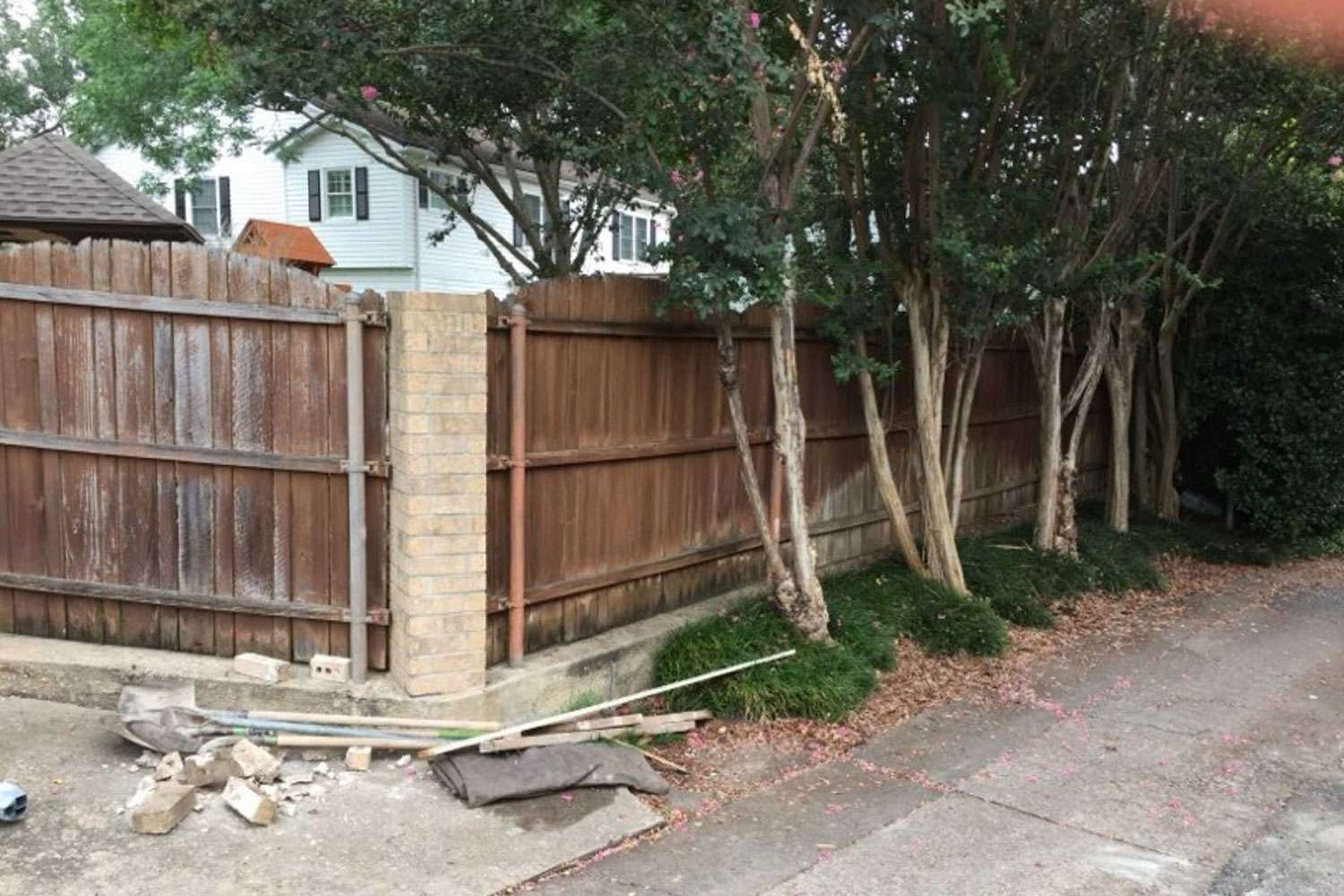
Most fence problems start at the posts, so the fix almost always starts there too. If a post is solid above the ground and only weak at the soil line, you can usually reinforce it with steel menders or reset it in fresh concrete. If the post is rotted through, the footing has broken loose, or a whole run is failing, it’s time to replace posts or the fence itself.
Robert O’Neal started 78 Fence in 1978 fixing sagging gates, rotted rails, and broken posts. His motto still holds: “If it’s broke, I can fix it. If I build it, it’s built to last.” Here’s how to handle the most common fence problems we see around Dallas.
Why Do Fences Fail in Dallas?
Nobody thinks about their fence until it starts leaning into the neighbor’s yard. Around here, a few things are usually to blame:
- Shallow posts in unstable soil. Local architects consider the first foot of Dallas soil unstable. That means a post needing a solid two-foot footer really needs to be set about three feet deep.
- Rot at the ground line. Wood posts stay damp where soil meets air, and that’s where they give out first.
- Corroding fasteners. The wrong nails lose their grip, and the fence slowly comes apart.
- Wind and storms. A tall, solid privacy fence acts like a sail when a North Texas storm rolls through.
How Do You Fix a Leaning Fence Post?
Before you buy anything, figure out what is leaning. Push on the post and watch the base.
- The whole concrete footing rocks in the ground. The footing failed. Bracing won’t hold, so the post needs to be dug out, set plumb, and reset in fresh concrete with a deeper, wider hole.
- The footing is solid, but the post is soft or cracked right at the soil line. The post can often be reinforced with steel menders or a repair stake.
- The post is rotted up the body or snapped off. Replace it. No bracket can save wood that won’t hold a screw.
How deep should a fence post be?
We recommend setting posts 3 to 4 feet deep in our soil, in a hole about three times the post’s diameter. A 2-inch post goes in a 6-inch hole and a 4-inch post in a 12-inch hole, which gives the concrete enough mass to hold. You can read more in our post, The Best Post Is a Deep and Heavy Post.
What Are the Best Ways to Reinforce a Fence Post?
You have more options than you might think. Here’s how they compare:
| Reinforcement option | Best for | Not a good fit when | DIY-friendly? |
|---|---|---|---|
| Steel post mender brackets (E-Z Mender-type, used in pairs) | Wood 4×4 posts that are sound above ground but weak or rotted at the base | Rot runs deep into the post, or the footing itself is loose | Yes, for handy homeowners |
| Drive-in steel repair stake or sleeve bolted beside the post | Posts with a bad foot of rot but otherwise solid wood | The post is cracked through or soft higher up | Sometimes |
| Reset in fresh concrete | Posts that are still in good shape but whose footing cracked or loosened | The post itself is rotted | Moderate, it takes digging |
| Replace with a galvanized steel post | Rotted or broken wood posts, gate posts, and windy spots | You want an exact wood-post match on a fence you’re keeping short term | Best left to a pro |
Do steel post menders really work?
Yes, when the post is a good candidate. Products like the Simpson Strong-Tie E-Z Mender are steel plates installed in pairs on either side of a 4×4 wood post, driven into the ground beside it and screwed to the post. Follow the manufacturer’s instructions for depth and fasteners. The wood above the rot has to be firm enough to hold those screws. If the post still wobbles once it’s fastened, the mender isn’t the fix. It’s the warning.
Is a steel post better than a wood post?
For strength and long life, steel is hard to beat, and we use it on many of our wood fences. The most common steel post for wood fences around Dallas is a 2 3/8-inch galvanized post, usually in 0.065 (15 gauge) or the thicker 0.095 (CS-20) wall. A sheltered 6-foot fence may do fine with 0.065, while an 8-foot fence along an open street may need thicker posts spaced closer together. We usually reach for CS-20 because it resists bending better.
How Do You Fix a Sagging Gate?
A sagging gate is usually a gate post asking for help. Check these in order:
- The hinge post. If it leans, the gate will drag no matter how many times you adjust the hinges. Reset or upgrade that post first.
- Hinges and hardware. Tighten or replace loose or bent hinges, and swap rusted screws for the right fasteners.
- The gate frame. Wood gates can rack out of square over time. An anti-sag kit or a steel frame can pull it back into shape.
For automated or heavy driveway gates, call a pro. Robert has been installing automated gates since 1989. Learn more about our commercial gate repair services.
How Do You Repair Broken Pickets and Rails?
Broken pickets are the easy part: pull the board, cut a new one to match, and fasten it with the right nails. A cracked rail can often be sistered with a new board or held with a metal rail bracket. If several rails are rotting, something is keeping that wood wet, so check the ground underneath.
Fasteners matter more than most folks realize. Galvanized nails in cedar react with the wood’s acids, leave dark streaks, and eventually lose their hold. Cedar mills recommend aluminum, stainless steel, or polymer-coated fasteners, and we typically use stainless steel ring-shank nails. More on that in The Type of Nails Matter Too.
What Should You Do After Storm or Wind Damage?
Safety first: stay clear of downed power lines and any fence held up by a fallen tree. Then:
- Take photos of the damage before anything is moved, in case you need them for insurance.
- Secure the gap if you have pets, a pool, or a business to protect.
- Check the posts, not just the panels. Wind often loosens footings in a whole section, even if only one panel fell.
- Call 811 before you dig new post holes. Sprinkler lines aren’t marked, so dig carefully.
If several posts snapped, the rebuild may need heavier posts or closer spacing.
How Do Repairs Differ for Wood, Vinyl, Metal, and Chain-Link Fences?
- Wood: The most repairable fence. Boards and sections can be replaced on their own, and most failures come from posts, rot, and fasteners. See our wood fences page.
- Vinyl: Repairs usually mean swapping a damaged panel or rail. A leaning vinyl post usually has a footing problem, and some can take a metal insert for extra strength.
- Ornamental metal (steel, aluminum, wrought iron): Watch for rust at welds and post bases, and touch up small spots early. Bent sections can often be replaced panel by panel.
- Chain-link: Torn fabric, bent top rails, and loose tension wire are all repairable without replacing the whole run. Learn more about our chain-link fence work.
Should You Repair or Replace Your Fence?
Repair usually makes sense when:
- The damage is limited to one or two sections or a couple of posts
- The posts are still sound and the footings are solid
- Pickets or rails are broken, but the wood around them is still firm
Replacement is usually the better value when:
- Posts are failing all down the line
- Rot is widespread, or the boards crumble when you push a screwdriver into them
- You’re repairing the same fence over and over each year
- The fence no longer does its job, whether that’s privacy, security, or keeping the dog in
Business owners and property managers can dig deeper in our guide, When Should You Replace vs. Repair a Commercial Fence?
Should You DIY Fence Repair or Call a Pro?
Replacing pickets, tightening hardware, or adding post menders to a solid post is a fair weekend project. Call a pro when:
- More than a couple of posts are leaning or rotted
- A gate post, automated gate, or heavy driveway gate is involved
- The fence is on a property line, near a pool, or protecting a business
- Storm damage has affected a long run of fence
- You’re not sure why the fence failed
A repair only lasts if it fixes the cause, so we look at the whole project, not just the broken board.
How Can You Keep Your Fence From Needing Repairs?
- Keep wood off the soil. A gap at the bottom keeps the fence from trapping dirt and water. A treated pine “kicker board” holds back the soil and is easy to swap out.
- Stain and seal. Our dipped stain and sealer lasts about 5 to 7 years before the wood needs cleaning and resealing.
- Pick the right wood. Cedar and cypress have natural resistance to insects and rot. See Wood Type and Treatment Counts.
- Walk the fence line a couple of times a year and after big storms. Push on posts, look for nail streaks, and check that gates latch.
- Keep sprinklers, vines, and mulch from soaking the base of the fence.
Managing a commercial property? Our commercial fence maintenance tips cover inspections in more detail.
Frequently Asked Questions About Fence Reinforcement and Repair
Can a leaning fence post be fixed without replacing it?
Often, yes. If the post is solid above ground and the footing is intact, steel post menders or a repair stake can reinforce it. If the footing rocks, reset it in fresh concrete. If it’s rotted through, replace it.
How deep should fence posts be set in Dallas?
We recommend 3 to 4 feet deep. The first foot of Dallas soil is considered unstable, so a post needing a two-foot footer should go about three feet deep.
Why does my fence have dark streaks?
Usually from corroding nails. Galvanized nails react with the acids in cedar and eventually lose their grip, so streaks are an early warning sign.
Are steel fence posts worth it?
For most wood privacy fences, yes. Galvanized steel doesn’t rot, and heavier posts like 0.095 (CS-20) resist wind better than lighter ones.
When should I replace my fence instead of repairing it?
Consider replacing it when posts are failing along the whole fence line, rot is widespread, or you’re paying for the same repairs year after year.
Does 78 Fence repair both residential and commercial fences?
Yes. We work on residential fences and gates as well as commercial fencing, security fencing, and gate systems in Dallas and the surrounding area.
Need Help With a Leaning, Sagging, or Storm-Damaged Fence?
Whether it’s one wobbly gate post or a whole fence line after a storm, Robert and his team will tell you honestly whether to repair, reinforce, or replace. We serve homeowners and businesses in Dallas and across the DFW area. See our residential page or our commercial fence repair page to see what we do.
Call 78 Fence at 214-351-0212, email robert@78fence.com, or contact us online for a free estimate.