
78 Fence Gate Safety & Liability Articles
In-Depth Industry Analysis
Who Bears the Burden? A Deep Dive into Liability for Commercial Automatic Gate Installations
For fence contractors, gate installers, commercial property managers, and insurance professionals, the liability landscape surrounding automatic gates is more complex — and more serious — than most realize. This article examines the regulatory standard, real-world incidents, and the professional obligations that attach the moment a certified installer touches a gate.
Section 1: When a Gate Becomes Automatic, Everything Changes
A manual gate is straightforward. Anyone can install one, operate it, swing it open or push it closed. There are no special rules governing its width, the space around it, or the gap between it and a fence post. A person is always present to observe and control it.
The moment automation is added, that simplicity disappears entirely. When no person is present to observe a gate’s movement — when a motor opens and closes it in response to a remote, a keypad, or a sensor — an entirely new regulatory and liability landscape opens up. What was a simple piece of hardware becomes a machine, and machines operating without direct human oversight are governed by a different set of rules and a different set of legal consequences.
Automation also introduces two separate parties where there was once only one. The gate itself — manufactured by companies such as TyMetal, Stevens Pipe and Steel, Master Halco, Benford Fence, or Collin County Fence — carries its own manufacturer’s liability. The gate operator — the motor and control system, manufactured by companies such as HySecurity, USAutomatic, Maximum Controls, All-O-Matic, or LiftMaster — is a completely separate product, from a completely separate company, with completely separate liability exposure.
The installer is the professional who brings both worlds together. And in doing so, the installer assumes the heaviest responsibility of all three parties. Every decision made at the time of installation — where the keypad is placed, where the photo eyes are mounted, how the gate is secured to its track — becomes part of a permanent record attached to that installer’s name and license.
Section 2: UL 325 — The Standard That Governs Automatic Gate Safety
UL 325 is the manufacturer standard for automatic gate safety. It is not a federal law. No government agency will cite a property owner for violating it. But in the event of an injury or fatality, courts and insurers treat failure to comply with UL 325 as negligence — and that distinction carries enormous legal and financial weight.
The key requirements of UL 325 that every certified installer must address are as follows:
Section 3: The “Last Person to Touch” Rule — Why Installers Cannot Walk Away
In the licensed trades, a principle applies that every certified professional understands: the last licensed professional to touch a piece of equipment becomes responsible for its safe condition. This is not limited to gate installers. It applies to plumbers, electricians, HVAC technicians, and every other trade where a license is on the line.
Consider a master plumber called to repair a gas line that was struck during a backyard remodel. When that plumber arrives, he may find old pipe, outdated fittings, and work done by hands unknown. He can choose to patch the specific issue and walk away — but he will not. Because the moment his name is on that job, every gas line in that structure is his responsibility. He replaces everything from the meter and pressure-tests the house. His name is on it, and his name means something.
The same principle applies, with equal force, to automatic gate installations.
Robert O’Neal, a certified automated gate installer, designer, and technician with 78 Fence, describes a real incident that illustrates this precisely. He was called to repair a gate following an ice storm. When he arrived and inspected the system, he found that the photo eyes — safety equipment required under UL 325 — had been taped together and stored inside the operator box. They had never been properly installed by whoever had done the previous work. The gate had been operating without its primary safety devices for an unknown period of time.
The moment Robert touched that gate, he became the last certified professional of record. He issued a change order requiring the photo eyes and all safety equipment to be properly installed before any further work would proceed. That is the correct professional response — but it is important to understand what a change order alone does not accomplish.
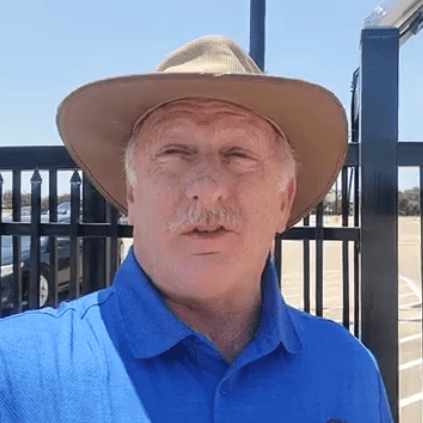
“It has to be part of the job. It’s like an attorney. Once I take the case, my name’s on it.”
Issuing a change order documents the problem. It does not remove liability. The work must actually be completed, inspected, and confirmed to meet UL 325 recommendations. A signed change order sitting in a file folder does not protect anyone if the gate injures someone in the interim. The path to compliance must be followed through to completion — or the job must be declined entirely.
A certified installer who encounters a non-compliant gate has two options and only two: bring the gate into full compliance as a documented and completed part of the job, or refuse the job. There is no professional middle ground.
Section 4: Real-World Incidents — The Human Cost of Non-Compliance
The UL 325 guidelines did not emerge from theoretical risk modeling. They were written — and continue to be updated — in response to real incidents involving real people. Understanding those incidents is essential to understanding why compliance is treated with the seriousness it deserves.
Dickies Arena, Fort Worth, Texas
At Dickies Arena in Fort Worth, a person died because a gate keypad was mounted too close to the gate. The individual was able to reach through the gate while entering the access code. The gate moved, and they were caught and choked. This high-profile incident is among the principal reasons that UL 325 keypad placement requirements exist today and are taken as seriously as they are in the gate industry. The standard does not exist in a vacuum — it exists because people died when it was not followed.
Swing Gate Child Fatality
A child discovered that she could fit through the gap between a swing gate and the concrete column against which it latched. She asked someone to open the gate — to hit the remote — and was crushed between the moving gate and the column as it swung. The gap that allowed her to pass through when the gate was stationary became a lethal pinch point the moment the motor drove the gate closed. This is precisely the design vulnerability that UL 325 swing gate requirements are intended to prevent.
A New Installation — Built Wrong From Day One
Robert O’Neal personally observed a brand-new gate installation near a Sam’s Club in his area that violated multiple UL 325 requirements. The keypad was mounted too close to the gate. Standing at the keypad, a user could reach through the gate and touch the post on the inside — creating an entrapment and choke risk identical in nature to the Dickies Arena fatality. The installation was new. The concrete was still fresh. And it was already dangerous.
This example illustrates a critical point: non-compliance is not always the result of aging equipment, deferred maintenance, or corner-cutting over time. It can be built into a gate from the very first day of operation, by an installer who either did not know the requirements or chose to ignore them.
Ice Storm Gate Failure
A sliding gate that came loose from its support post during an ice storm created an immediate crush risk for anyone in the vicinity. Beyond the physical danger, this incident brought a certified professional onto a job site where he discovered that the previous installer had stored the photo eyes inside the operator box — meaning the gate had been running without its primary safety devices from the beginning. Ice storms do not create non-compliance. They reveal it.
Section 5: The Handyman Problem — Why the Cheapest Bid Can Cost Everything
Every property owner who has solicited bids for an automatic gate installation has encountered a significant price spread. A certified, insured professional may quote $24,000 for a project. An unlicensed installer — a handyman, a general laborer, someone who has installed gates before but holds no certification and carries no insurance — may quote $12,000 for the same job. That $12,000 difference is real money. And it is a trap.
An unlicensed, uninsured installer typically carries none of the following:
- Commercial General Liability (CGL) insurance
- Commercial auto insurance
- Workers’ compensation insurance
Without these, there is no insurance policy to file a claim against. If something goes wrong — if the gate injures or kills someone — the only avenue for financial recovery is a civil lawsuit against the installer personally.
The Texas Recovery Problem
In Texas, state law generally prevents the seizure of a person’s vehicle to satisfy a civil judgment. If the installer has no significant assets, rents rather than owns a home, and files for bankruptcy, the judgment may be uncollectable — leaving victims with no path to financial recovery, regardless of the severity of the harm.
The scenario is not abstract. A property owner saves $12,000 by choosing the cheaper installer. The gate is installed improperly — without proper photo eye placement, without keypad setback, without entrapment zone protection. A child is killed. The property owner pursues every legal avenue available. The installer has no insurance, no significant assets, and discharges any remaining obligation through bankruptcy. The $12,000 savings produced a fatality and zero financial recourse.
The certified professional’s higher quote includes something that cannot be replicated by price shopping: accountability. When a licensed, insured installer makes a mistake, there is a policy to file against, a license to hold accountable, and a professional whose continued livelihood depends on getting the work right. That accountability structure is what the $12,000 difference actually pays for.
What to Require Before Any Installer Begins Work
| Requirement | Why It Matters | Confirmed? |
| Commercial General Liability (CGL) Insurance | Covers property damage and bodily injury caused during or after installation | ▢ |
| Commercial Auto Insurance | Covers incidents involving the installer’s vehicles on your property | ▢ |
| Workers’ Compensation Insurance | Covers injuries to installers on your property — without it, you may be liable | ▢ |
| Certificate of Insurance in Property Owner’s Name | Makes the property owner an additional insured — provides direct coverage | ▢ |
A reputable, certified installer will provide a Certificate of Insurance without hesitation. If an installer balks at providing one, or claims they have coverage but cannot produce documentation, treat that response as a definitive answer about the quality and accountability of the work you are about to receive.
Section 6: What Certified Installers Do Differently
The gate industry recognizes three distinct professional certifications, each addressing a specific phase of the gate’s lifecycle:
- Certified Automated Gate Designer — trained and tested on the design and specification of gate systems, including site-specific safety assessment
- Certified Automated Gate Operator Installer — trained and tested on the physical installation of gate operators and associated safety hardware
- Certified Automated Gate Technician — trained and tested on the ongoing maintenance, diagnostics, and repair of automated gate systems
All three certifications require renewal every three years, with continuing education credits required at each renewal. The gate industry does not issue lifetime certifications. Standards evolve, incidents generate new requirements, and certified professionals are expected to stay current.
In practical terms, a certified installer approaches every gate — new installation, service call, or post-storm repair — through the lens of safety compliance first. They walk a site and assess it: Where is the entrapment zone? What is the keypad setback? Are the photo eyes positioned correctly? Is this gate secured against coming off its track? These are not questions they ask after the work is done. They are the foundation on which the work is planned.
Certified installers also apply professional-grade job site safety protocols throughout every phase of work — traffic cones, safety tape, fall protection — not because a safety inspector may show up, but because the same discipline that protects workers on a job site is the discipline that produces a safe gate when the work is complete. These are not separate standards. They are expressions of the same professional identity.
Perhaps most importantly, a certified installer will not perform work on a non-compliant gate without a documented, contracted, and completed path to bring that gate into compliance. The change order is necessary. The completed work is mandatory. And if a client refuses to authorize the corrective work, the certified installer will decline the job entirely — because their name, their license, and their liability are attached to every gate they touch, for as long as that gate is in operation.
Closing: Safety Is Not Expensive — Safety Is Priceless
A properly installed automatic gate, built by a certified professional with full insurance coverage, does more than open and close on demand. It protects every person who walks near it. It protects every child who plays nearby. It protects the property owner from catastrophic legal and financial liability. And it protects every professional whose name is attached to the work.
The UL 325 standard exists because people died. The certification requirements exist because untrained installers got it wrong. The insurance requirements exist because when things go wrong without coverage, there is no recovery — only loss. None of these safeguards are obstacles to getting a gate installed. They are the conditions under which a gate can be installed safely, responsibly, and with confidence.
Verify your contractor. Verify their certifications. Verify their insurance. Get the certificate in your name. And make sure every safety recommendation is met before that gate ever moves under power. That is what a certified professional does — and that is what every property owner deserves.