
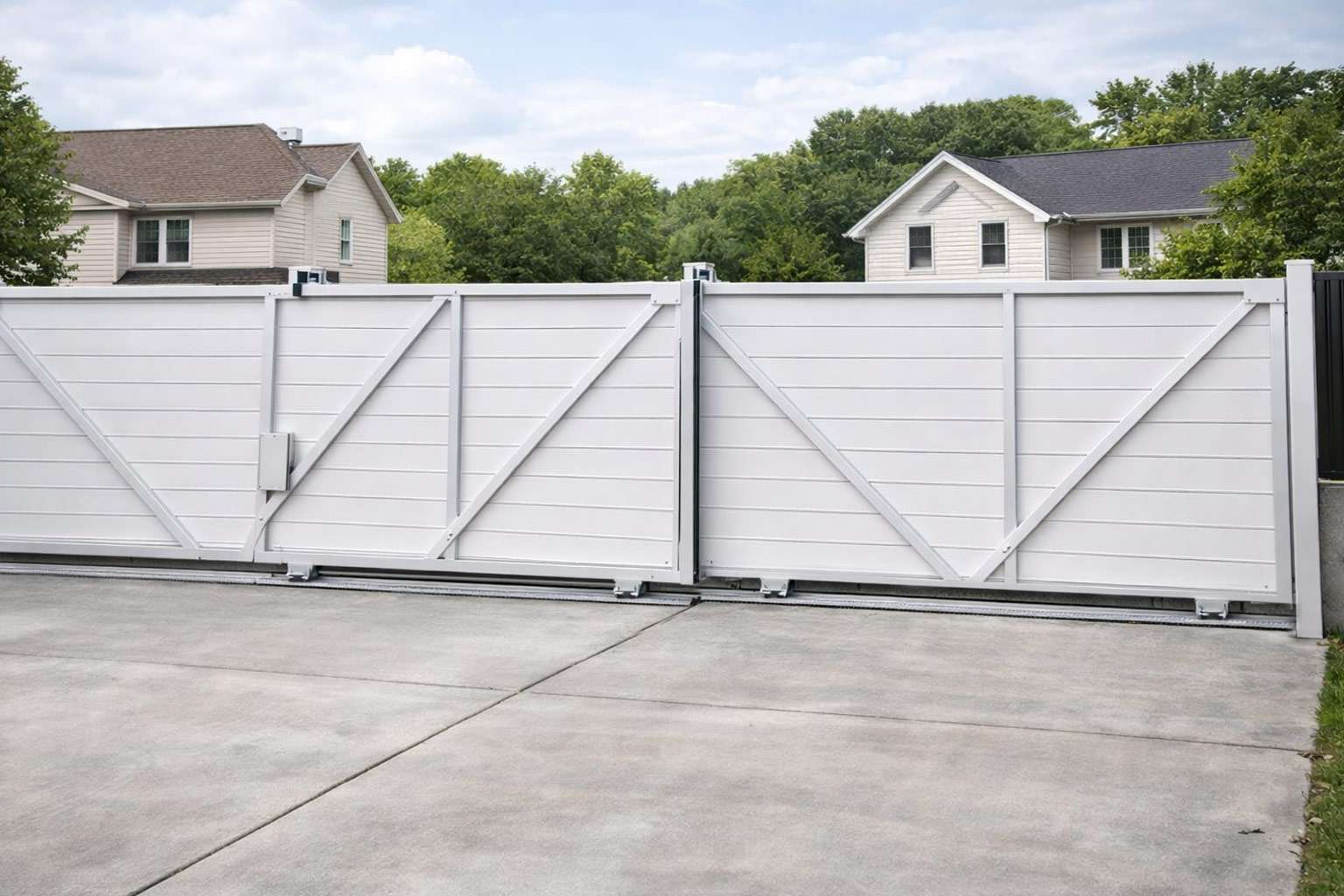
Tandem Slide Gates vs Single Slide Gates: Which Is Right for Your Property?
When designing a commercial gate system, one of the most important decisions is whether to use a single slide gate or a tandem slide gate. The choice directly impacts performance, longevity, and how well the system handles daily traffic—especially in high-demand environments like industrial facilities, logistics yards, and distribution centers.
What Is a Single Slide Gate?
A single slide gate is a one-piece gate that moves horizontally along a track or cantilever system to open and close an entry point.
Best Use Cases
- Standard-width openings
- Low to moderate traffic facilities
- Properties with limited space for gate stacking
Advantages
- Simpler design and installation
- Lower upfront cost
- Fewer moving components
Limitations
As gate width increases, performance begins to decline. Larger single gates require more structural support, which can lead to increased strain on rollers and hardware, potential sagging or misalignment, and higher long-term maintenance needs.
What Is a Tandem Slide Gate?
A tandem slide gate uses two separate gate panels that move together to cover a wide opening. Instead of relying on one oversized gate, the system distributes the load across both panels.
Best Use Cases
- Wide commercial or industrial entrances
- High-traffic facilities with frequent gate cycles
- Sites with heavy vehicle flow, including trucks and trailers
Advantages
- Load is evenly distributed across two panels
- Smoother operation with less mechanical strain
- Improved alignment and tracking over time
- Longer system lifespan under heavy use
Tandem systems are engineered for performance. By splitting the workload, they reduce wear on critical components and maintain consistent operation even in demanding conditions.
Performance Comparison
Structural Stress
Single slide gates concentrate all weight and movement on one structure, increasing stress on rollers, posts, and frames. Tandem gates distribute that load, reducing strain and improving long-term stability.
Durability
Tandem systems typically outperform single gates in high-cycle environments because components are not overextended.
Maintenance
Single gates often require more frequent adjustments as size and usage increase. Tandem systems maintain alignment more effectively, reducing ongoing service needs.
Space Requirements
Tandem gates require additional space to accommodate both panels when open, which should be considered during site planning.
Which One Should You Choose?
Choose a Single Slide Gate if:
- Your opening is standard width
- Traffic volume is moderate
- Budget is a primary concern
Single slide gates are best suited for properties where the gate span is manageable and daily usage is not excessive. They provide a reliable and cost-effective solution for office parks, small commercial properties, and light industrial sites. With fewer components and a simpler design, they are easier to install and maintain in lower-demand environments. If your operation does not involve constant truck traffic or oversized entry points, a single slide gate can deliver consistent performance without unnecessary complexity.
Choose a Tandem Slide Gate if:
- You have a wide entrance
- Your facility handles frequent vehicle traffic
- Long-term durability and performance are priorities
Tandem slide gates are designed for larger, more demanding applications where a single gate would be pushed beyond its limits. Facilities such as distribution centers, trucking yards, and manufacturing plants benefit from the added structural support and smoother operation. By splitting the gate into two panels, tandem systems reduce mechanical strain, maintain alignment over time, and handle high-cycle usage more efficiently. For properties where uptime, reliability, and reduced maintenance are critical, a tandem system provides a more scalable and durable solution.
Why This Matters for High-Traffic Facilities
In high-demand environments, gate systems operate continuously throughout the day. Frequent cycles, heavy vehicles, and wide openings create conditions where single gates can wear down quickly. Tandem slide gates are built to handle these demands, providing smoother operation, reduced downtime, and lower long-term repair costs.
Final Takeaway
Single slide gates are effective for smaller, lower-traffic applications, while tandem slide gates are built for scale. As opening sizes increase and usage becomes more demanding, tandem systems deliver better performance, reduced wear, and longer operational life. Choosing the right system is not just about upfront cost—it is about ensuring reliable performance over years of daily use.