
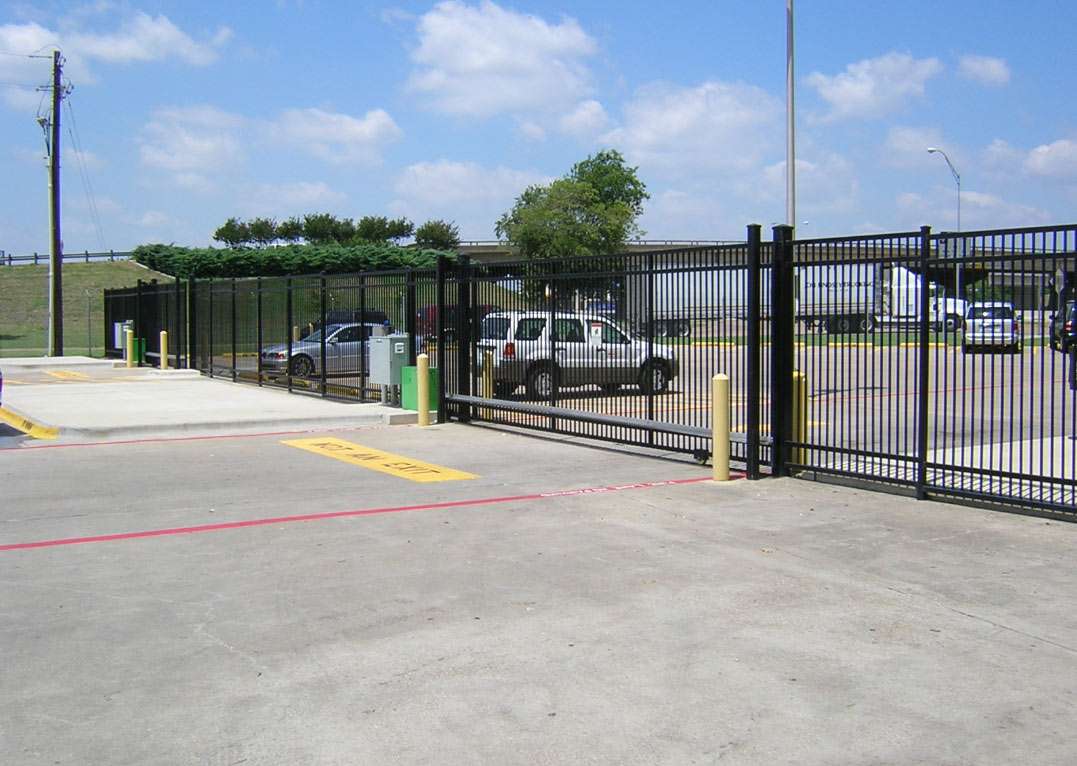
Choosing the right gate system for a commercial or industrial property directly impacts security, traffic flow, and long-term maintenance costs. Two popular options often compared are vertical pivot gates and sliding gates. While both serve as effective access control solutions, they function very differently and are better suited for different environments. Understanding how each gate type works can help you select the right system for your property’s layout and operational needs.
How Vertical Pivot Gates Work
A vertical pivot gate opens by rotating upward on a pivot mechanism, lifting the entire gate panel out of the entryway. This vertical movement allows the gate to clear the opening without sliding along the ground or swinging outward. Because the gate operates off the ground, it performs reliably in areas with uneven pavement, debris, or limited side clearance.
Vertical pivot gates are often chosen for properties where space is tight, vehicle traffic is heavy, or quick opening speeds are required.
Common examples of where vertical pivot gates are used include:
- Properties with limited side clearance where a sliding gate cannot retract fully
- Entrances with uneven pavement, gravel, or debris that would interfere with ground-based systems
- High-traffic facilities that require fast opening and closing to reduce vehicle congestion
- Secure sites where rapid access control is important, such as emergency vehicle entrances
- Commercial or industrial properties with narrow driveways or obstructed entry points
- Locations where maintaining a clean, debris-free ground surface is difficult
For a deeper dive, check out our article on what is a vertical pivot gate.
How Sliding Gates Work
Sliding gates move horizontally across an opening, either along a ground-mounted track or through a cantilever system that keeps the gate elevated. Traditional track-based sliding gates rely on clean, level surfaces to operate properly, while cantilever sliding gates eliminate the need for a ground track and offer improved reliability in challenging conditions.
Sliding gates are commonly used where wide openings are needed and sufficient space is available alongside the fence line for the gate to retract.
Common examples of where sliding gates are used include:
- Properties that require very wide gate openings for trucks, trailers, or heavy equipment
- Sites with enough space along the fence line for the gate to slide open fully
- Industrial facilities and warehouses with predictable traffic patterns
- Locations where a slower, controlled gate movement is acceptable
- Properties choosing cantilever sliding gates to avoid ground-track maintenance
- Commercial sites that prioritize perimeter coverage over rapid opening speed
Vertical Pivot Gate vs Sliding Gate: Key Differences
Vertical pivot gates operate by lifting upward, making them ideal for locations with limited side space or uneven ground. Sliding gates require horizontal clearance and may be affected by debris or ground conditions, depending on the system design.
In terms of speed, vertical pivot gates typically open and close faster than sliding gates, which can be beneficial in high-traffic or high-security environments. Sliding gates, however, are often preferred for very wide openings where a vertical pivot system may not be practical.
Maintenance requirements also differ. Vertical pivot gates have fewer ground-level components, reducing exposure to dirt and debris. Sliding gates—especially track-based systems—may require more frequent cleaning and alignment to maintain smooth operation.
Security Considerations
Both gate types provide strong perimeter security when properly designed and installed. Vertical pivot gates offer a rigid, tamper-resistant barrier that is difficult to force open due to their upward locking mechanism. Read more benefits of vertical pivot gates. Sliding gates provide excellent security as well, particularly cantilever systems with reinforced frames and controlled access integration.
The right choice depends on how the gate will be used, the level of access control required, and how frequently the gate will cycle throughout the day.
Which Gate Is Right for Your Property?
A vertical pivot gate is often the better choice for properties with limited space, uneven ground, or the need for fast operation. Sliding gates work well for wide openings and properties that have adequate space for the gate to slide open fully. Many industrial and commercial facilities choose cantilever sliding gates to avoid the maintenance issues associated with ground tracks.
Ultimately, the best gate system is the one that matches your property’s physical layout, traffic demands, and security goals.
When comparing a vertical pivot gate vs sliding gate, there is no one-size-fits-all solution. Each gate type offers unique advantages depending on the application. By understanding how these systems differ, you can make an informed decision that supports long-term performance, security, and efficiency for your commercial property.